
How to Build a B2B Lead Generation Funnel From Scratch
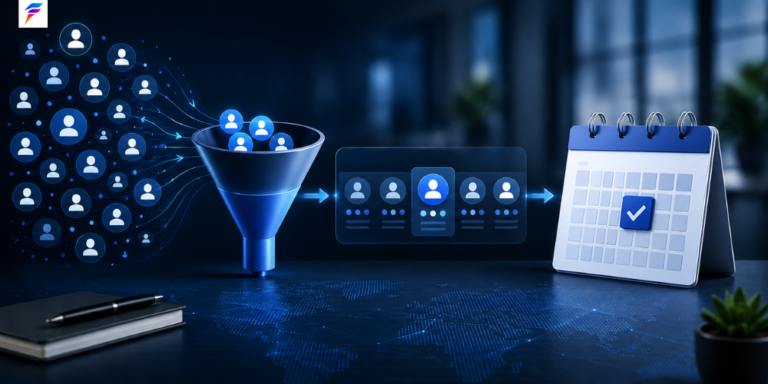
Building a B2B lead generation funnel from scratch is no longer optional for growth-focused companies. In a market where buyers research independently and compare multiple vendors, businesses need a repeatable system that turns strangers into qualified opportunities. A structured approach creates predictability and improves revenue performance over time.
A modern B2B lead generation funnel does much more than collect contact information. It aligns marketing and sales activities while supporting a smoother buying experience. Therefore, companies that invest in a strong sales funnel for B2B often see higher conversion rates and shorter sales cycles.
The entire lead generation process depends on understanding buyer intent, timing, and communication. Successful organizations also prioritize B2B pipeline building and optimize each stage of the outbound lead funnel. As a result, they create a steady flow of prospects without relying solely on referrals.
According to research from HubSpot, companies that prioritize lead nurturing generate 50% more sales-ready leads while reducing costs by 33%. Those numbers explain why smart businesses view lead generation as an investment rather than an expense.
How to Build a B2B Lead Generation Funnel From Scratch
Many businesses treat lead generation like fishing with a blindfold. They throw everything into the water and hope something bites. Unfortunately, hope rarely appears on quarterly reports.
Creating a successful funnel requires strategy, patience, and constant refinement. Fortunately, the process becomes easier when each stage supports the next.
Understanding the Foundation of a B2B Lead Generation Funnel
Every profitable B2B lead generation funnel starts with a clear understanding of the ideal customer profile. Without this foundation, campaigns become expensive experiments.
Identify Your Ideal Customer
Before launching outreach campaigns, define who benefits most from your service. Consider company size, industry, revenue range, and decision-maker roles.
For example, a software company selling automation solutions may target:
- Marketing agencies
- Insurance companies
- SaaS startups
- Healthcare providers
According to LinkedIn’s State of Sales Report, top-performing organizations prioritize buyer research and personalization.
As sales expert Jill Konrath famously said:
“The way you sell today has radically changed from how buyers buy.”
Her observation reflects reality. Buyers expect relevance, not generic sales pitches.
Map the Buying Journey
The modern buyer rarely books a meeting after seeing one email. Instead, they consume content, compare providers, and evaluate trust.
Consequently, your funnel should support four stages:
- Awareness
- Interest
- Consideration
- Decision
Ignoring any stage creates leaks that reduce conversions.
Creating an Effective Sales Funnel for B2B Growth
A strong sales funnel for B2B balances visibility with credibility. Businesses that rush prospects often lose them.
Top-of-Funnel Awareness
At the awareness stage, prospects seek answers rather than vendors.
Therefore, educational content performs exceptionally well. Blog posts, LinkedIn content, webinars, and case studies help attract potential buyers.
Research from Demand Gen Report shows that 47% of buyers review several pieces of content before contacting vendors.
Thought leadership matters because trust develops before conversations begin.
Middle-of-Funnel Engagement
Interest alone does not produce revenue. Engagement converts curiosity into intent.
This stage often includes:
- Email nurturing
- Retargeting campaigns
- Industry reports
- Personalized outreach
Imagine someone downloading an ebook about insurance lead generation. Sending an immediate “Buy now!” email resembles proposing marriage during a first coffee meeting. It usually ends badly.
Instead, successful companies educate first and sell later.
Bottom-of-Funnel Conversion
At this stage, prospects compare alternatives.
Case studies, testimonials, ROI projections, and discovery calls become essential. Buyers want evidence rather than promises.
According to Gartner, B2B buyers spend only 17% of their purchasing journey meeting with suppliers. Therefore, every interaction must deliver value.
Optimizing the Lead Generation Process
An efficient lead generation process combines technology with human expertise.
Build Multiple Traffic Sources
Relying on one acquisition channel creates risk.
Successful businesses often combine:
- SEO
- LinkedIn outreach
- Email campaigns
- Paid advertising
- Referral partnerships
Diversification strengthens long-term growth and reduces dependency.
Use Lead Magnets Strategically
People protect their inboxes carefully. Consequently, valuable resources encourage engagement.
Popular lead magnets include:
- Industry reports
- ROI calculators
- Templates
- Whitepapers
- Benchmark studies
According to Content Marketing Institute, educational resources remain among the highest-converting content assets.
Implement Marketing Automation
Automation improves consistency and scalability.
Tools like HubSpot, Apollo, and Mailchimp help businesses nurture leads efficiently. However, automation should support relationships rather than replace them.
Marketing expert Seth Godin once said:
“People do not buy goods and services. They buy relations, stories, and magic.”
His quote highlights why personalization remains essential.
Strengthening B2B Pipeline Building
Revenue depends on effective B2B pipeline building, not isolated campaigns.
Align Marketing and Sales Teams
Misalignment creates friction and lost opportunities.
Sales teams need qualified prospects. Marketing teams need feedback. Therefore, communication between both departments should remain continuous.
Research by Forrester found that aligned organizations experience significantly faster revenue growth.
Establish Lead Qualification Criteria
Not every lead deserves immediate attention.
Frameworks like BANT and MEDDIC help prioritize opportunities based on:
- Budget
- Authority
- Need
- Timeline
As a result, teams focus on prospects with genuine buying intent.
Monitor Funnel Metrics
Numbers reveal weaknesses that assumptions cannot.
Track metrics such as:
- Conversion rates
- Cost per lead
- Open rates
- Response rates
- Meeting-to-close ratio
Continuous improvement transforms average funnels into revenue engines.
Building a Scalable Outbound Lead Funnel
Many companies underestimate the power of an outbound lead funnel. Yet outbound remains highly effective when executed correctly.
Personalization Wins Attention
Generic emails rarely succeed.
Prospects recognize templates immediately. Consequently, customized messaging produces better response rates.
A prospect who receives: “Hi John, I noticed your agency recently expanded into healthcare marketing.”
will respond more positively than: “Dear valued business owner.”
Nobody wakes up hoping to become a “valued business owner.”
Multi-Touch Sequences Increase Conversions
Most deals require several interactions.
Therefore, combine:
- Phone calls
- Video messages
Persistence matters because timing often determines outcomes.
Measure and Refine
Outbound campaigns evolve through testing.
Subject lines, call-to-actions, and follow-up timing should improve continuously. Small adjustments often produce dramatic gains.
Real-Life Example of Successful B2B Pipeline Building
Software company HubSpot built one of the most recognized inbound ecosystems in the world.
Instead of relying solely on aggressive sales tactics, they focused on educational content, automation, and nurturing. Their strategy transformed visitors into leads and leads into customers.
Their approach became so influential that it helped popularize inbound marketing itself.
Another excellent example comes from Salesforce. The company invests heavily in thought leadership and customer education.
These organizations demonstrate an important lesson. Sustainable growth rarely comes from shortcuts.
Why Companies Outsource Their B2B Lead Generation Funnel
Building a high-performing funnel requires expertise across SEO, outreach, automation, content, and analytics.
Many organizations lack the time or internal resources to manage everything effectively. Consequently, outsourcing becomes a strategic advantage rather than an operational compromise.
Experienced partners bring proven systems, tested frameworks, and specialized knowledge. Businesses avoid costly trial and error while accelerating pipeline growth.
This approach allows leadership teams to focus on serving customers and closing deals.
Creating a successful B2B lead generation funnel requires more than software and email templates. It demands clarity, consistency, and continuous optimization. Companies that understand buyer behavior and refine their sales funnel for B2B gain a measurable competitive advantage. Whether the focus is improving the lead generation process, enhancing B2B pipeline building, or scaling an outbound lead funnel, the underlying principle remains unchanged. Trust drives conversions, and systems create predictable growth.
Ready to Build a Revenue-Generating Funnel?
At LeadFynix, we help businesses create scalable lead generation systems that deliver qualified opportunities consistently. Whether you need outbound campaigns, appointment setting, or complete pipeline development, our team builds strategies that turn prospects into customers.
Stop chasing leads and start building a predictable revenue engine.
Book a free strategy session with LeadFynix today and discover how your business can generate more qualified meetings, accelerate growth, and scale with confidence.