
LinkedIn Outreach for B2B: What Actually Books Meetings in 2026
LinkedIn outreach for B2B has become a key part of how companies start meaningful conversations and book qualified meetings. Everyone claims their LinkedIn outreach strategy is different. Almost nobody’s actually is. Open any inbox and you will find five near-identical messages praising someone’s “recent post about AI.” That sameness is precisely why most campaigns quietly die in the requests folder. Meanwhile, a smaller group of teams keeps booking meetings anyway, using the exact same platform everyone else ignores. The gap between those two outcomes rarely comes down to luck. It comes down to specific, measurable habits worth understanding properly. Some of those habits sound almost too simple to matter, yet the data keeps proving otherwise.
The Numbers Nobody Wants to Admit Out Loud
Connection acceptance across LinkedIn campaigns now sits around 27 to 30 percent on average. Reply rates have actually softened recently, drifting from roughly 34 percent down toward 26 percent. Meeting-booked rates typically land between one and three percent of total sends. That sounds discouraging until you compare it against cold email, which converts far less often. Cold email replies now average somewhere between one and five percent industry-wide. Adding a personalized note to a connection request lifts replies to 9.36 percent instantly. Skip that note entirely, and replies drop to just 5.44 percent instead. Therefore, the maths here rewards specificity over volume almost every single time. Sending more messages without improving relevance simply multiplies your rejection rate.
Why Timing Matters in LinkedIn Outreach for B2B
Tuesday consistently produces the strongest reply rates across most industries and regions. Monday follows closely, while weekend messages fall off a cliff completely. Yuriy Boyko, head of account management at Belkins, explains the pattern simply: professionals respond fastest early in the workweek. As the week progresses, however, fatigue and shifting priorities quietly reduce responsiveness. Sending your best message on a Friday afternoon, frankly, wastes real effort. Consequently, any serious linkedin outreach strategy should treat timing as a genuine lever, not an afterthought.
Why Sending More Rarely Means Booking More
A common instinct says higher volume must produce more meetings eventually. Recent platform data actually contradicts that assumption rather directly. Acceptance rates peaked among accounts sending 10 to 19 invites daily, not the busiest senders. Push volume higher, and acceptance rates start dropping instead of climbing further. LinkedIn’s own restriction algorithm also watches acceptance closely, throttling accounts that dip below roughly 25 percent. Sustained drops below that threshold trigger automatic limits on your sending capacity. So chasing scale before nailing relevance usually backfires within a few weeks. A smaller, sharper list consistently outperforms a bloated, generic one.
Personalization Beats Personalization Theatre
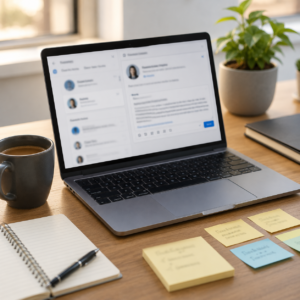 Here comes the uncomfortable part nobody enjoys hearing. Referencing someone’s recent post now reads as generic as “hope this finds you well.” Prospects have seen that trick a thousand times already this year. Real specificity means citing an actual signal, like a new leadership hire or funding round. A signal-anchored message referencing a fresh VP hire generates roughly 18 percent reply rates. A generic industry trend message, by contrast, barely clears 4 percent. That gap alone should reshape how your team writes every single opening line.
The Multichannel Reality Behind Every Booked Meeting
Pure LinkedIn-only sequences increasingly underperform compared to coordinated, multichannel approaches. Combining LinkedIn, email, and phone touches lifts engagement by roughly 40 percent overall. Martal ran a 24-month omnichannel programme for Polygon, a Stockholm-based firm entering the US. That relationship-led campaign delivered 203 SQLs and 139 booked meetings across the full engagement. Warming a cold prospect through LinkedIn before ever calling them clearly changes how that call gets answered. Most reps skip this step entirely and wonder why their cold calls go nowhere. So treating LinkedIn as one instrument in a larger orchestra, not the whole band, pays off consistently.
What Actually Happens After Someone Accepts Your Request
Most replies genuinely come from the first or second follow-up message, not the initial pitch. Teams that send one message and quietly stop are leaving real replies unclaimed. Instead, structure a short sequence with distinct value in every single touch. A useful resource in message two, then a relevant case study in message three, works well. Never repeat the same ask using slightly different wording each time. Prospects notice repetition instantly, and it reads as lazy automation rather than genuine interest. A well-paced sequence usually spans five to seven days between each touch. Rushing every message within hours reads as desperate rather than confident.
Where B2B Lead Generation London and Other Markets Diverge
American prospects respond well to confident, faster-paced outreach sequences generally. UK and European prospects, however, often expect a slower, more relationship-first cadence instead. We explored this exact divergence in our recent piece on UK versus US B2B lead generation. The same principle applies here: match your linkedin lead generation cadence to local buyer expectations. A single global template simply cannot serve every region equally well. We also broke down how personalised cold outreach earns real replies. That same logic carries directly into LinkedIn sequencing too.
The Uncomfortable Truth About Training and Effort

Ninety-three percent of sales executives have never received formal social selling training. That statistic alone explains why so many campaigns feel identical and forgettable. Reps with strong Social Selling Index scores report 45 percent more opportunities than weaker peers. Yet most companies still treat LinkedIn as an afterthought bolted onto email campaigns. Fixing that gap does not require expensive tools or clever automation tricks necessarily. It mostly requires consistent effort, real research, and messages built around genuine specificity.
The Honest Conclusion Worth Sitting With
LinkedIn has not stopped working, despite what tired sales teams keep claiming loudly. What stopped working is the templated, lazy version everyone kept recycling for years. Teams that invest in signal-based targeting, proper timing, and genuine follow-up still win consistently. Everyone else keeps sending the same message and wondering why nothing converts anymore. Building that kind of disciplined outreach system takes real time most internal teams simply do not have. It also demands constant testing, list hygiene, and someone watching the data weekly. That exact gap between intention and execution is where Leadfynix steps in daily.
If your LinkedIn outreach currently feels like shouting into a well, let’s change that today. Fill out the quick form below and tell us your industry, goals, and target accounts. Our team will show you exactly what a properly built 2026 sequence looks like. Your competitors are already reading guides just like this one right now.